Alan Greenspan, former chairman of the U.S. Federal Reserve, passed away on June 22 at the age of 100. The cause of death was complications from Parkinson’s disease.
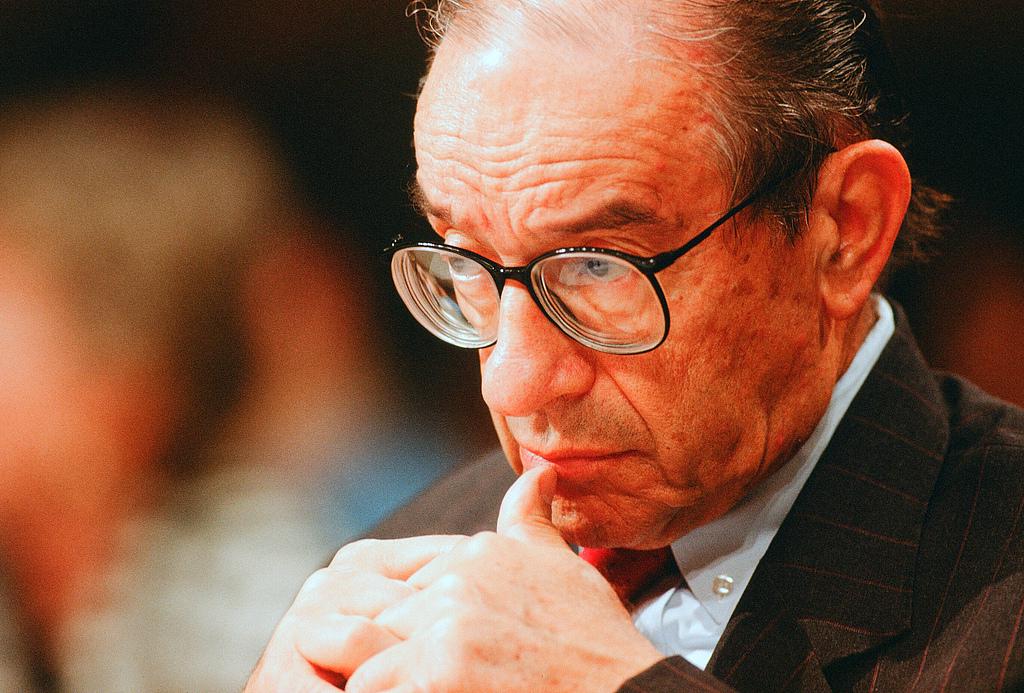
Greenspan served five consecutive terms as Fed chairman under four U.S. presidents, steering U.S. monetary policy for nearly 19 years.
The “Greenspan Put” — he himself explained the Fed’s intervention logic during financial crises: “A sharp decline in markets may hinder economic growth, so it is necessary to take precautionary actions such as interest rate cuts during crisis moments.” Greenspan’s Financial Career Born on March 6, 1926, in the Washington Heights neighborhood of New York City, Greenspan demonstrated exceptional mathematical talent from an early age. In his youth, he studied at the Juilliard School of Music and played jazz saxophone and clarinet in a band. He subsequently enrolled at New York University to study economics, earning a bachelor’s degree in 1948 and a master’s degree in 1950. He later pursued doctoral studies at Columbia University under the mentorship of Arthur F. Burns, who would go on to serve as Chairman of the Federal Reserve. After leaving Columbia University in 1953, Greenspan joined an economic consulting firm, eventually becoming the president and principal shareholder of Townsend-Greenspan Co. In 1967, he made his initial foray into politics as an economic advisor to Nixon’s campaign. Following Nixon’s resignation in 1974, Greenspan entered the Ford administration, serving as Chairman of the Council of Economic Advisers, where he helped reduce the U.S. inflation rate from 11% to 6.5%. In 1987, President Ronald Reagan appointed Greenspan to succeed Paul Volcker as Chairman of the Federal Reserve. Just two months later, on October 19, 1987, “Black Monday” struck, with the Dow Jones Industrial Average plunging over 22% in a single day. During Greenspan’s tenure at the Fed, the United States experienced a prolonged economic expansion from 1991 to 2001, marked by accelerated globalization and the rapid rise of the internet. He also steered the Fed through the aftermath of the dot-com bubble burst and the economic shocks following the September 11 attacks. During the Clinton administration, U.S. stocks repeatedly hit record highs, and Greenspan became a public celebrity. The Economist magazine dubbed him a “rock star,” while his supporters called him “The Maestro.” On January 31, 2006, Greenspan retired, becoming the second-longest-serving Chairman of the Federal Reserve in history, trailing only William McChesney Martin, who led the institution from 1951 to 1970. Post-Crisis Scrutiny Following the 2007-2008 financial crisis, Greenspan faced severe scrutiny over his regulatory policies. Although Greenspan had raised the concept of “irrational exuberance” as early as 1996, critics argued that he failed to identify the housing bubble in the early 2000s and long advocated for deregulation of the financial industry, creating conditions that contributed to the collapse of the financial system.
During his testimony before the U.S. Congress in October 2008, Greenspan described the financial crisis as a “once-in-a-century credit tsunami.” He stated, “The scope of this crisis has far exceeded my imagination.” Greenspan is a lifelong Republican, yet he maintained a close relationship with Democratic President Bill Clinton. He even joked, “Clinton has been the best Republican president we’ve had in a long time.”